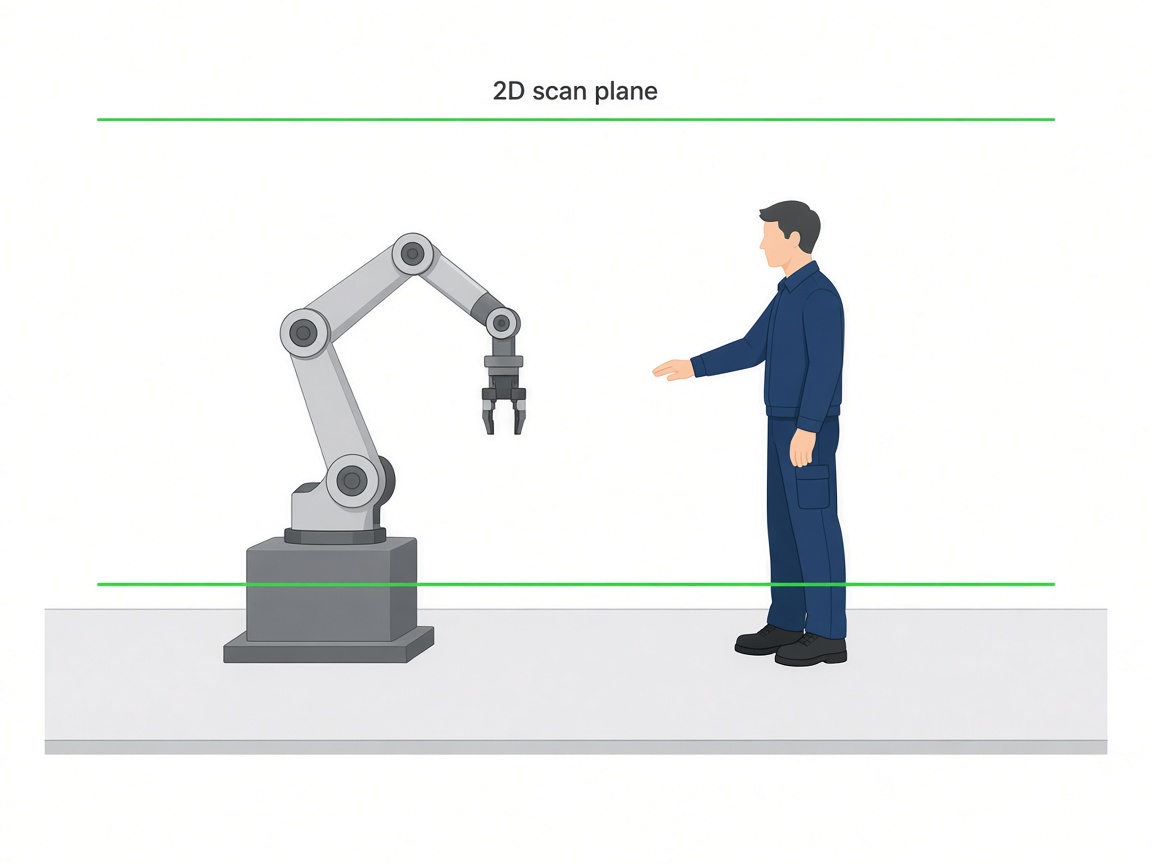
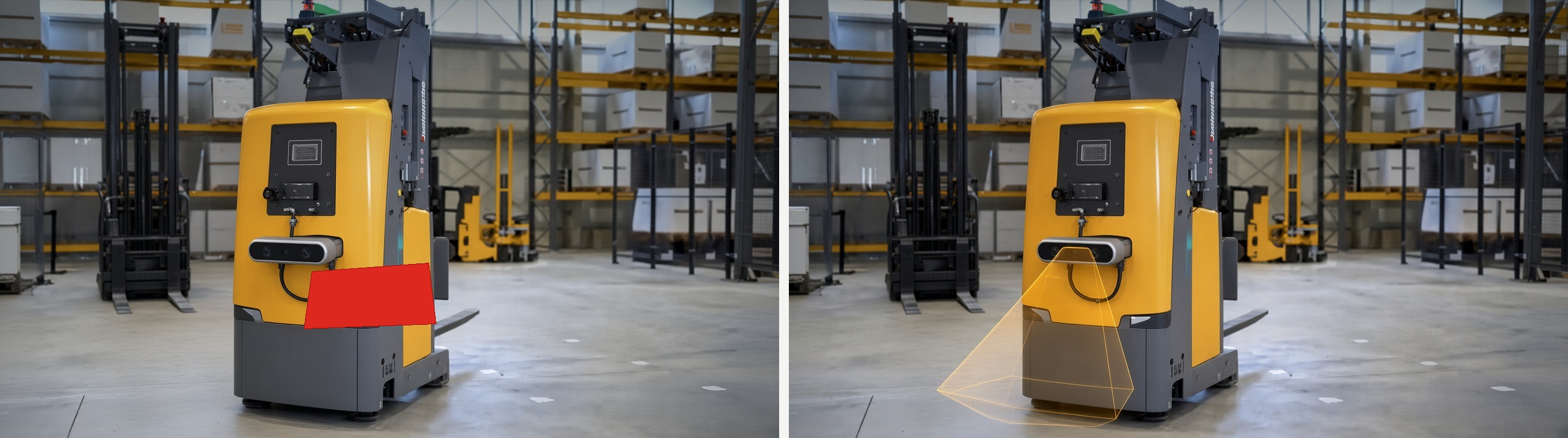
Conventional 2D safety LiDAR
- Detects intersection with one scan plane
- Often needs extra sensors or fields for height coverage
- Mature, certified, well understood
3D safety rated camera
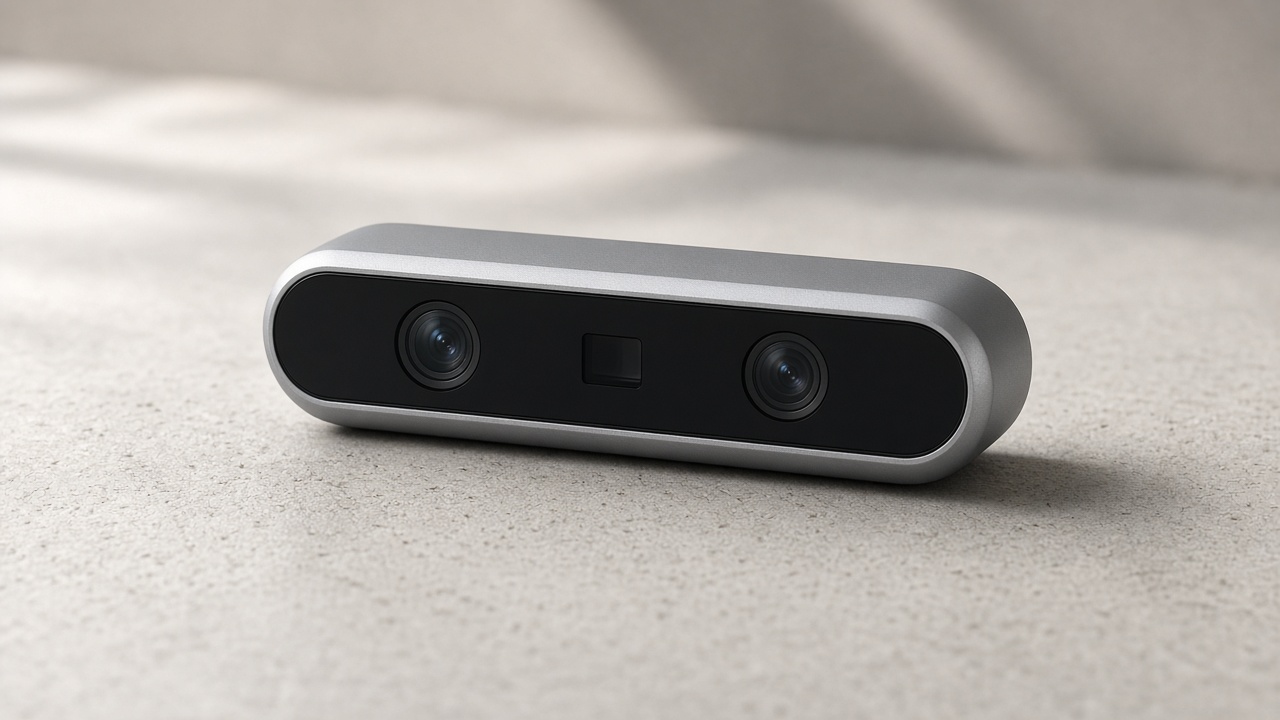
Stereo RGB-D workspace monitoring for industrial robot cells. Speed and separation monitoring with a deterministic safety output—no AI inference PC for safety calculations.
Design targets: PL d / Category 3, SIL 2 · certification in progress
Why 3D matters
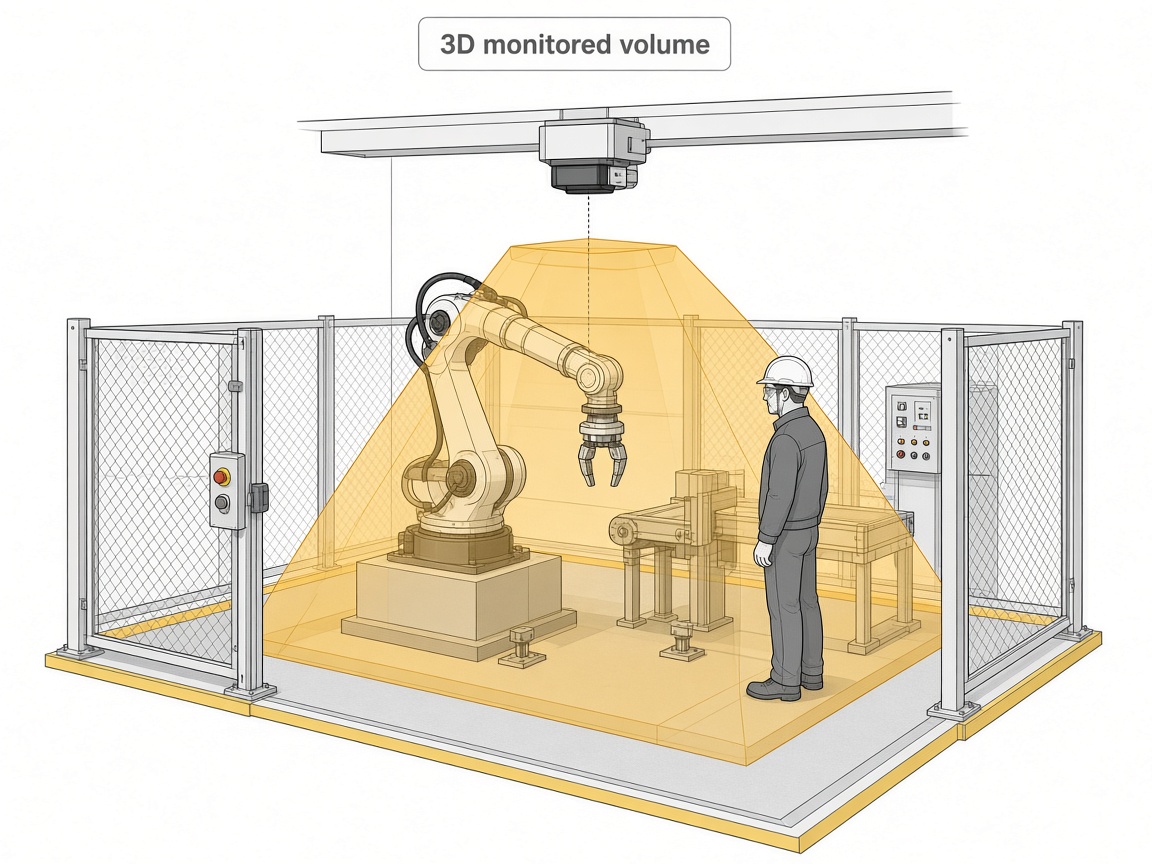
A single-plane scanner only sees where an object intersects its beam. Safety-Cam measures visible surfaces at multiple heights inside a defined 3D workspace—so elevated obstacles, tooling, and people entering shared work areas are part of the picture.
System at a glance
Intended values for a fixed-mounted industrial robot cell. These are design directions—not certified installed protective-field guarantees.
| Sensing | Active stereo depth (RGB-D) · deterministic FPGA processing |
|---|---|
| Installation | Fixed overhead mounting above the workcell |
| Floor footprint | ~7.2 × 4.5 m at 3 m mounting height (proposed optics) |
| Imaging | 2 stereo pairs · 1280 × 800 · 60 fps target per pair |
| Response | ≤ 35 ms sensor-response design target |
| Protective actions | 100% / 75% / 50% / 25% speed levels + protective stop |
| Safety output | Dual OSSD to cell safety controller (planned) |
| Supply | 24 V DC · IP65 design target |
Applications
Current focus
Overhead installation for machine tending, shared workstations, and material-handling robots. Monitors occupied space and supports speed-and-separation monitoring with protective stop when required.
Future development
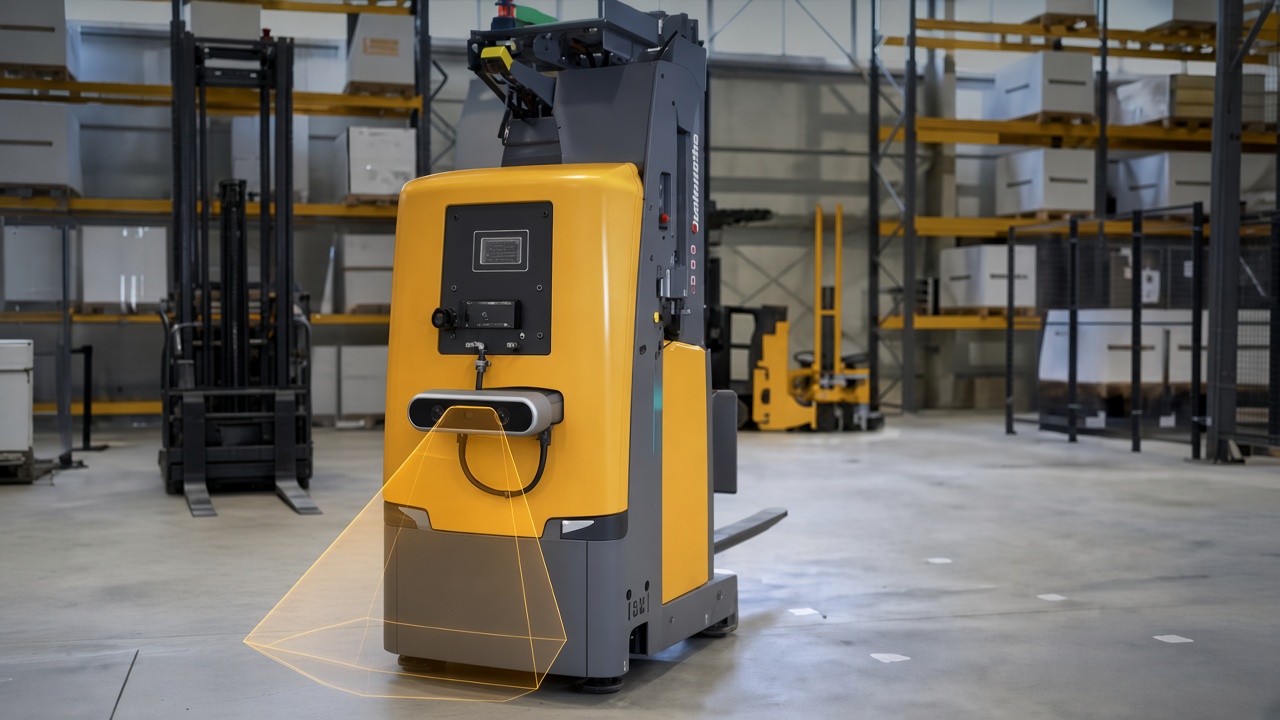
Vehicle-mounted forward 3D sensing for travel corridors, docking, and mixed pedestrian spaces. Larger volumetric coverage than a short bumper field—so obstacles above floor-scanner height stay in view.
Safety functions
Safety-Cam aims to monitor the robot and surrounding occupied space, evaluate required separation using verified motion and stopping parameters, and request an appropriate safety response.
Measures the gap between the robot envelope (including tooling/load) and occupied space. Requests 100%, 75%, 50%, 25% speed, or protective stop.
Missing frames, implausible depth, robot not found, channel disagreement, or critical faults remove motion permission and request a protective stop.
Target standards include ISO 13849-1, IEC 62061 / IEC 61508, IEC 61496 series, ISO 10218-2, ISO 13855, and related machine-safety requirements.
Pilot program
We’re finalizing use cases with fixed robot cells and selected AMR applications. Tell us about your cell—we reply personally.